A sole guardian order under the Hindu Marriage Act (HMA) & Hindu Minority and Guardianship Act (HMGA) in India grants one parent exclusive custody and decision-making power for a child, focusing on the child’s welfare, with courts often favoring mothers for young children (under 5) or awarding custody based on the child’s best interests, even if a father is the natural guardian, especially in separation or divorce, by invoking Section 26 of the HMA for interim/final orders. While HMGA names the father as natural guardian, HMA empowers courts to decide custody during matrimonial proceedings, ensuring the child’s needs are met, potentially overriding default guardianship to grant sole legal/physical custody to a fitter parent, including an unwed mother. [1, 2, 3, 4, 5]
Key Principles for Sole Guardianship Orders:
• Child’s Welfare is Paramount: The primary consideration for any court order is the holistic well-being, education, and maintenance of the minor child.
• Hindu Minority and Guardianship Act (HMGA) (1956):
• Names the father as the natural guardian, but the mother acts as guardian if the father is absent, deceased, or unfit.
• For children under 5, custody generally goes to the mother unless she is unfit.
• For children above 5, custody can go to either parent, but courts favor mothers as natural caregivers.
• Hindu Marriage Act (HMA) (1955) – Section 26:
• Allows courts to pass orders regarding custody, maintenance, and education of children during matrimonial disputes (divorce, separation).
• Courts can issue interim or final orders, suspending or varying previous ones, focusing on the child’s best interests.
• Unfit Parent: A court can grant sole legal custody to one parent if the other is deemed unfit due to issues like alcoholism, psychological problems, or gambling.
• Unwed Mothers: Recent judgments recognize an unwed mother as the sole legal guardian without needing the father’s consent. [1, 2, 3, 4, 5, 6]
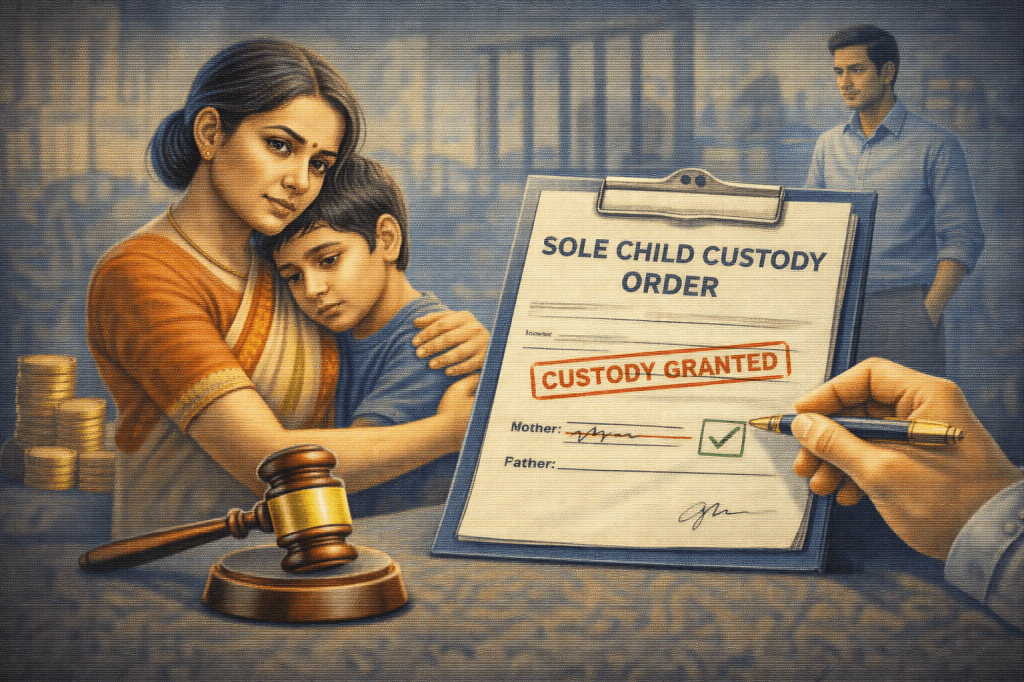
How to Get a Sole Guardian Order:
1. File a Petition: Apply to the Family Court, either independently under guardianship laws or as part of a divorce/separation case.
2. Show Unfitness/Best Interest: Detail why the other parent is unfit or how sole custody serves the child’s best interests (welfare, needs).
3. Court Orders: The court will issue orders for custody, maintenance, and education, prioritizing the child’s welfare, potentially granting sole legal or physical custody. [2, 3, 4, 7]
AI responses may include mistakes.
[1] https://www.indianbarassociation.org/sc-redefined-hindu-guardianship-law/
[2] https://pinklegal.in/topics/marriage-and-divorce/hindu-custody.html
[3] https://www.altacit.com/resources/family-law/child-custody-rights-in-india/
[4] https://ksandk.com/private-clients/laws-child-custody-visitation-rights/
[5] https://blog.ipleaders.in/understanding-guardianship-under-hindu-law-through-judicial-precedents/
[6] https://www.indialawoffices.com/knowledge-centre/child-custody-laws-in-india
[7] https://www.kaleeyantey.com/child-custody-battles/
 Latest Legal News, Stories & Updates by LegalSeva